They Run Races (Behind the Scenes)
Jesuit-educated race directors set the course, and everything else, before the running begins
By Patricia McGeever
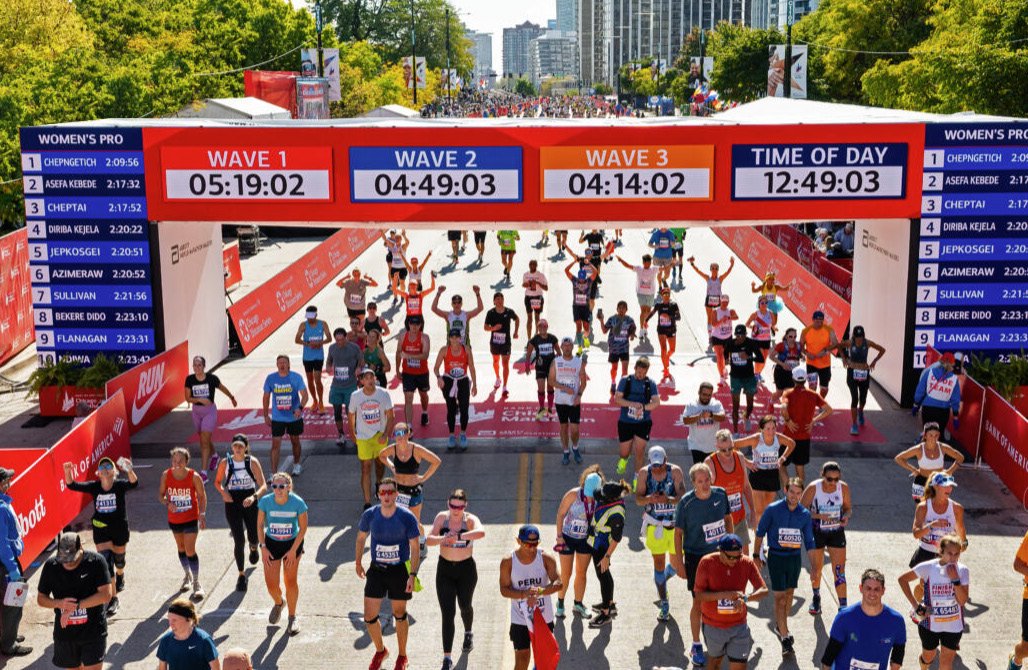
Jesuit-educated race directors work diligently to ensure the smooth operation of races large and small across the Midwest and beyond, including the Chicago Marathon, pictured here.
Behind every dramatic running race finish, and every victory along the course, are dedicated organizers who have taken care of all that needs to be done to make the event possible. Organizers need leaders—race directors in this case—and many of those leaders, in the Midwest and beyond, learned foundational lessons at the Jesuit high schools and universities they attended.
Tom Cooney is an alumnus of Loyola Academy in Wilmette, Ill., and Loyola University Chicago (LUC), where he is in the Hall of Fame as both a runner and a track coach.
“When the running boom hit in 1970s, people started to put on races, and because I was the coach they came up to me and said, ‘Can you help me put these races on,’” he recalls. “Initially, I did it to get a t-shirt and a thank you, but gradually it became a profession.”
Cooney’s company, Lakeshore Athletic Services, is involved with more than 350 events around the country, including the Chicago Marathon, Ironman Triathalon, JP Morgan Chase Corprate Challenge and Loyola Lakefront International, an intercollegiate cross-country race hosted by LUC. The annual race has been run for 47 years, and Cooney has directed them all.
IT’S KIND OF A GIVE BACK TO LOYOLA FOR ME BECAUSE THEY HELPED ME GET STARTED IN MY CAREER.
“It’s kind of a give back to Loyola for me because they helped me get started in my career,” he says. Cooney has also served as the long-time logistics coordinator of the Chicago Marathon.
“I’ve had the honor and privilege of working with and knowing Tom for over 30 years,” says Carey Pinkowski, executive race director of the Bank of America Chicago Marathon. “Tom has been a leader in running events from cross-country, to road races, to the track. He’s a great ambassador for the sport and an integral part of the planning and operations of the Bank of America Chicago Distance Series events.”
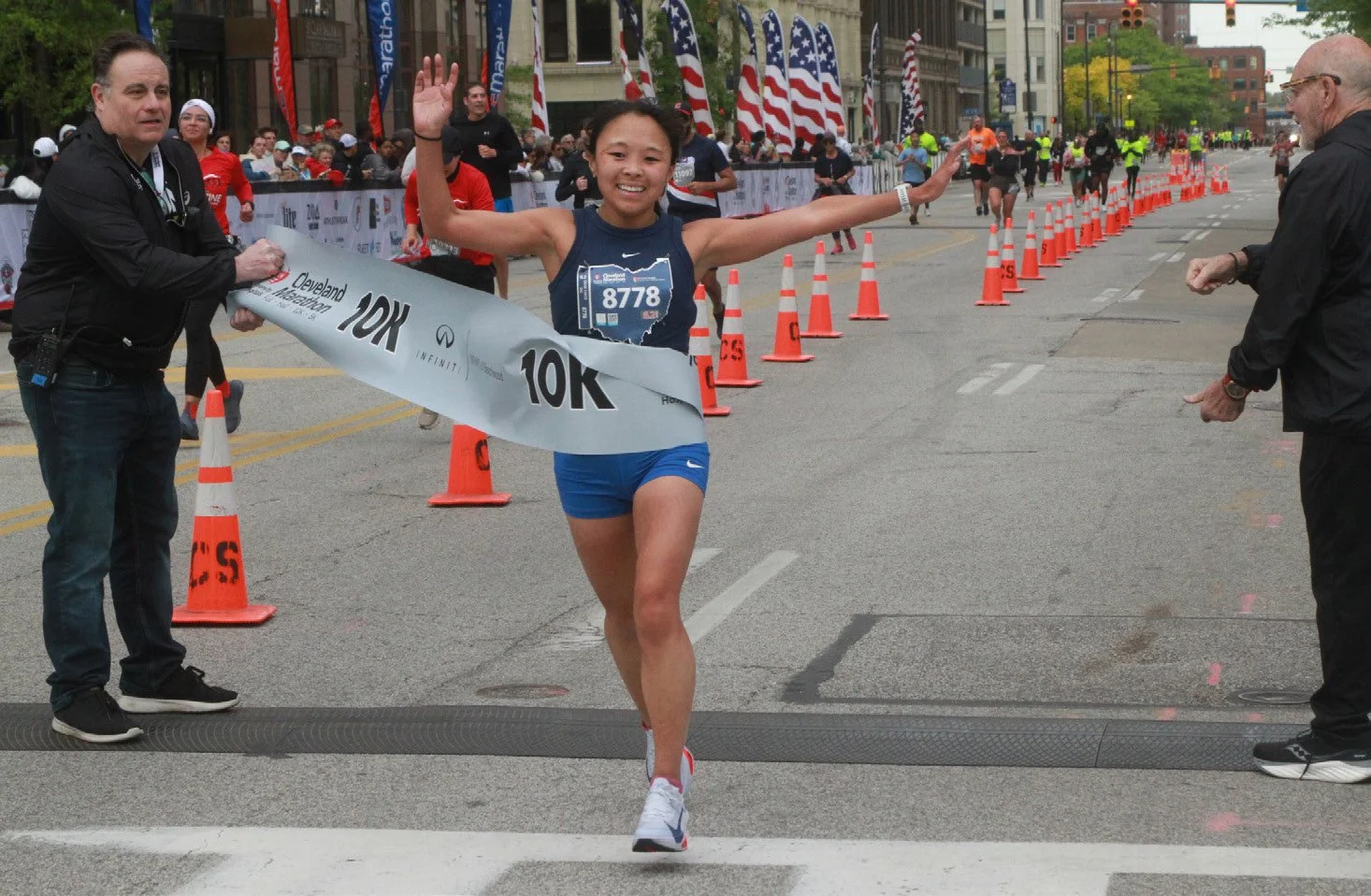
Ralph Staph (left) holds the finish line tape at a 10K race connected to the Cleveland Marathon. An alumnus of Gesu School and Saint Ignatius High School in Cleveland, he’s been familiar with the race since childhood and now serves as its director.
A cross-country and middle-distance runner in both high school and college, Cooney remains devoted to LUC, offering internships to students and jobs to alums. “When you are around an institution for so long, you understand how they think there, and how they conduct business,” Cooney says about LUC. “I think I can look at my company and say we have followed those ideals.”
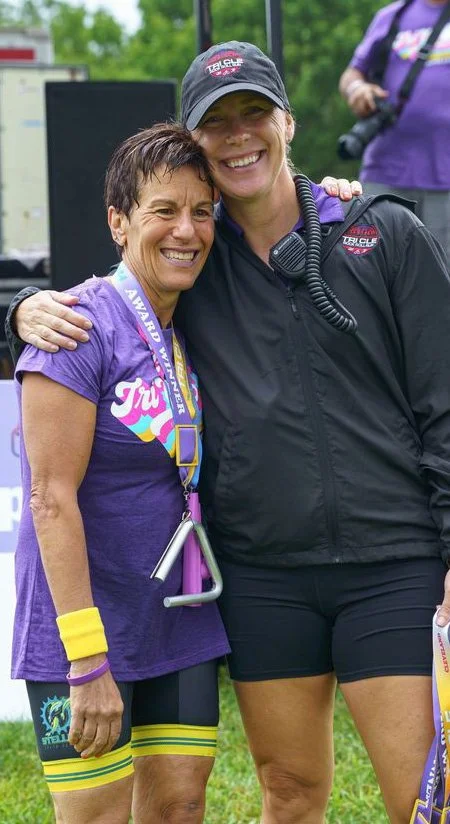
John Carroll University graduate Natalie McManamon (right) with a finisher of the TriCLE Rock and Roll Run in Cleveland. The race is organized by Grit Races, the company McManamon co-owns with two partners.
Cooney’s Lakeshore Athletic Services also supports races around the country, including Grandma’s Marathon in Duluth, Minn., where University of Detroit Jesuit High School and Academy alumnus Gregory Haapala is race director, and the Flying Pig Marathon in Cincinnati, led by chief operating officer John Cappella.
A graduate of Cincinnati’s St. Xavier High School, Cappella earned a master’s degree in education and sports administration from Xavier University (XU), also in Cincinnati. His boss, Doug Olberding, the president and CEO of Pig Works, is a fellow XU alum and long-time XU professor. While Pig Works renovates its new building, it operates out of the XU Alumni Center.
“Being men for others was obviously a thing at St. Xavier,” Cappella says. “And what you can learn by serving others, and what you get out of it, was something I think I’ve carried with me all my life.”
Ralph Staph, race director of the Cleveland Marathon, has been around the race since he was a child, attending nearby Gesu Catholic School and Saint Ignatius High School. But he never expected to become its director. A political science major in college, he was living in California when he lost his job after 9/11. His father, president of the Cleveland Marathon, invited him to come home and work on the race, which, like many other running races, has a philanthropic concern.
“We have about 30 charities and have raised over $600,000,” Staph says. “So, we’re helping the local community, and that’s what the Jesuits taught me to do. I’m glad that my work benefits people that need help.”
Natalie McManamon has been competing in triathlons for 20 years, and six years ago she was able to combine her passion with her profession. The John Carroll University (JCU) graduate lost her job during the COVID pandemic and asked a friend if he would share her resume.
“And he’s like, ‘I’m starting this triathlon. Do you want to help me collect sponsors?’” McManamon says. “It really just kind of snowballed from there.”
It was a natural fit and allowed her to use what she’d learned as a marketing major at JCU. She worked on the new triathlon, the TriCLE Rock and Roll Run, for five years and in January 2026, Grit Races, the business she co-owns with two partners, took ownership of it. Her team also revived an old race, the Huntington Sprint Triathlon in Bay Village, Ohio, which took place in June.
Outside the Midwest, Boston College alumnus Jack Fleming is president and CEO of the Boston Athletic Association, which hosts the Boston Marathon, and Christine Burke, who earned her MBA at Fordham University, is chief commercial officer of New York Road Runners, the organization that oversees the TCS New York City Marathon. She has run the race nine times, but not since taking over as its organizer.
“The emotion we are witness to, and knowing our team has supported each one of those 60,000 runners in their journey to get to that finish line, is actually just as meaningful, if not more meaningful, than the experience of running the race itself,” Burke says.
“Pat Evans knows everything about how the city functions,” says Fr. Matthew Walsh, SJ, who served on Gesu’s board while he was pastor of Saint John’s Parish at Creighton University. “She’s been really good in terms of helping Gesu Housing move from the leadership of Br. Mike to a lay person with experience in the area of housing in Omaha.”
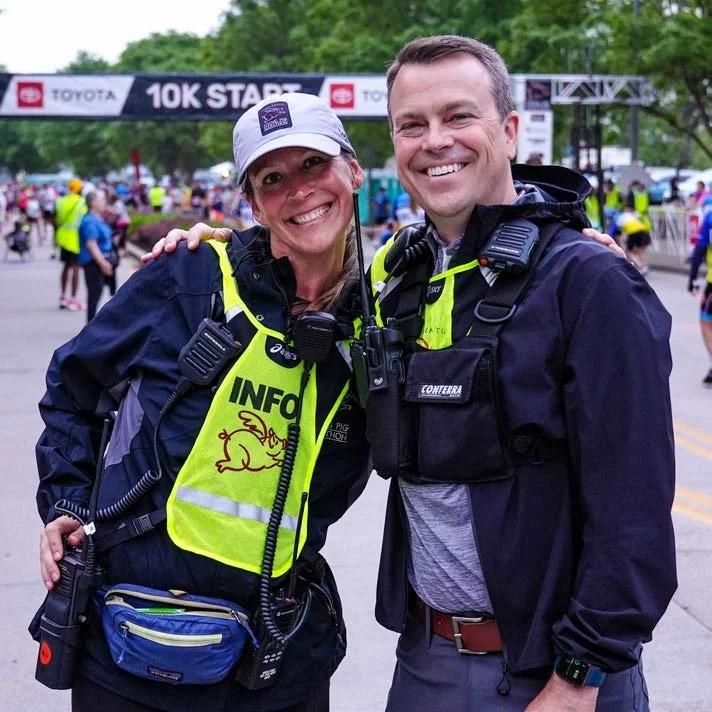
John Cappella (right) celebrates race day with a staff member at the Flying Pig Marathon in Cincinnati. A graduate of St. Xavier High School and Xavier University, both in Cincinnati, Cappella is the race’s chief operating officer.
Speaking to the community support that Gesu Housing has received over the years, Fr. Walsh says, “Omaha is very generous. There’s a lot of prosperity and there’s a lot of wealth, but it’s understated, and it’s not flashy. There’s a robust philanthropic community that is constantly trying to determine what’s the best way to help people in need.”
Harr calls attention to Gesu Housing’s Jesuit roots and the way Br. Wilmot inspired Creighton Prep graduates to volunteer for hands-on roles in early construction projects. Some of them went on to become longtime supporters and even board members.
“Gesu Housing was never really about houses,” Harr says. “The houses were the means. The mission was people.” Creighton University professor Fr. Larry Gillick, SJ, a classmate of Br. Wilmot’s at Marquette University High School in Milwaukee, watched the future Br. Wilmot answer a call to build, which later blossomed into his life’s work. “He was not building his kingdom,” Fr. Gillick says of Br. Wilmot’s transformation from sports hero with prospects for college stardom to “man for others” plying his talents as a carpenter, educator and builder for others. “He was building Christ’s Kingdom.”
rather than arrive to bless it. Brothers serve as colleagues, teachers and companions on the road. “The approachability brothers have with people, wherever they are in their faith and life, has always been consoling and inspiring,” Br. Trombley says.
None of this is a criticism of my brothers who are priests. It is a description of a different angle of approach. There are rooms brothers can walk into, and conversations brothers can have, where an ordained priest would change the temperature.
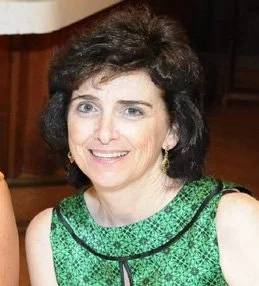
Patricia McGeever is an award-winning freelance writer and television news producer based in Cincinnati. A proud Xavier Musketeer, she is a retired Irish dancer and instructor.
Think about how siblings actually work. When something goes wrong, you call your siblings first, before you call your parents, before you talk to your father. In that initial conversation, you can be raw, unfiltered and unafraid, as you seek counsel about the situation. Brothers “can meet people in the ways that ordained ministers cannot,” says Br. Sean Barry, SJ. As a Jesuit brother, this is what I can offer to the Church: a bridge, a space for people to come and be present without fear or judgment, to be their brother and accompany them to the sacraments, sitting with them in the pews as fellow siblings and children of God.
When I decided to become a Jesuit, it was not initially easy for my mother to accept. She had imagined herself as a grandmother. Throughout my life, she saved little things she thought would make fun gifts, keepsakes and memories for my children. Recently, after my mom visited me in Chicago and spent a few days with me and some other Jesuits, she sent me a thank you note with this message: “I always wanted to give you the brothers and sisters you always wanted as a kid, and I see now that God finally gave you those siblings, and I now have more sons than I could have ever imagined.”