Being There
In his four years of working with Jesuit Refugee Service (JRS) in Maban, South Sudan, Fr. Matt Ippel, SJ, has learned the profound importance of presence
By Maggie Palider
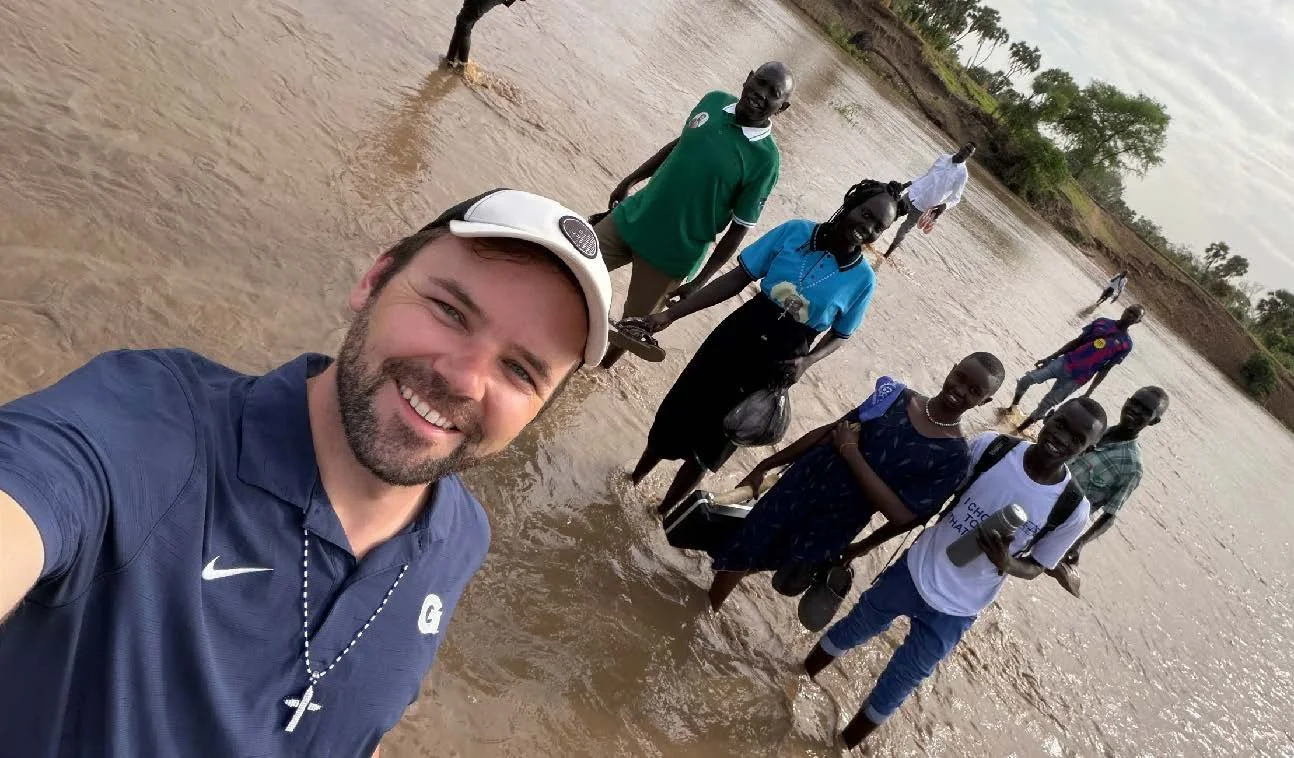
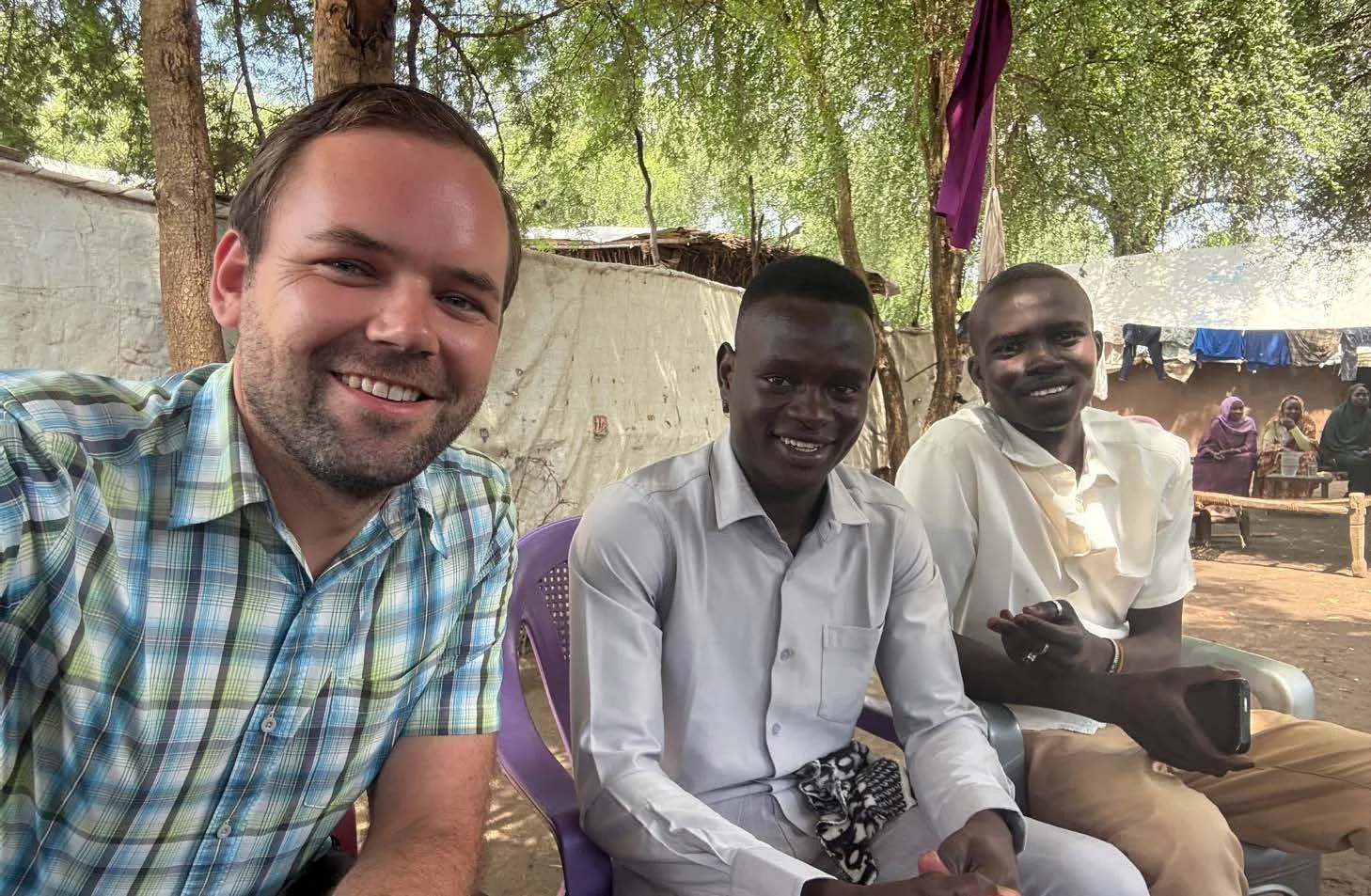
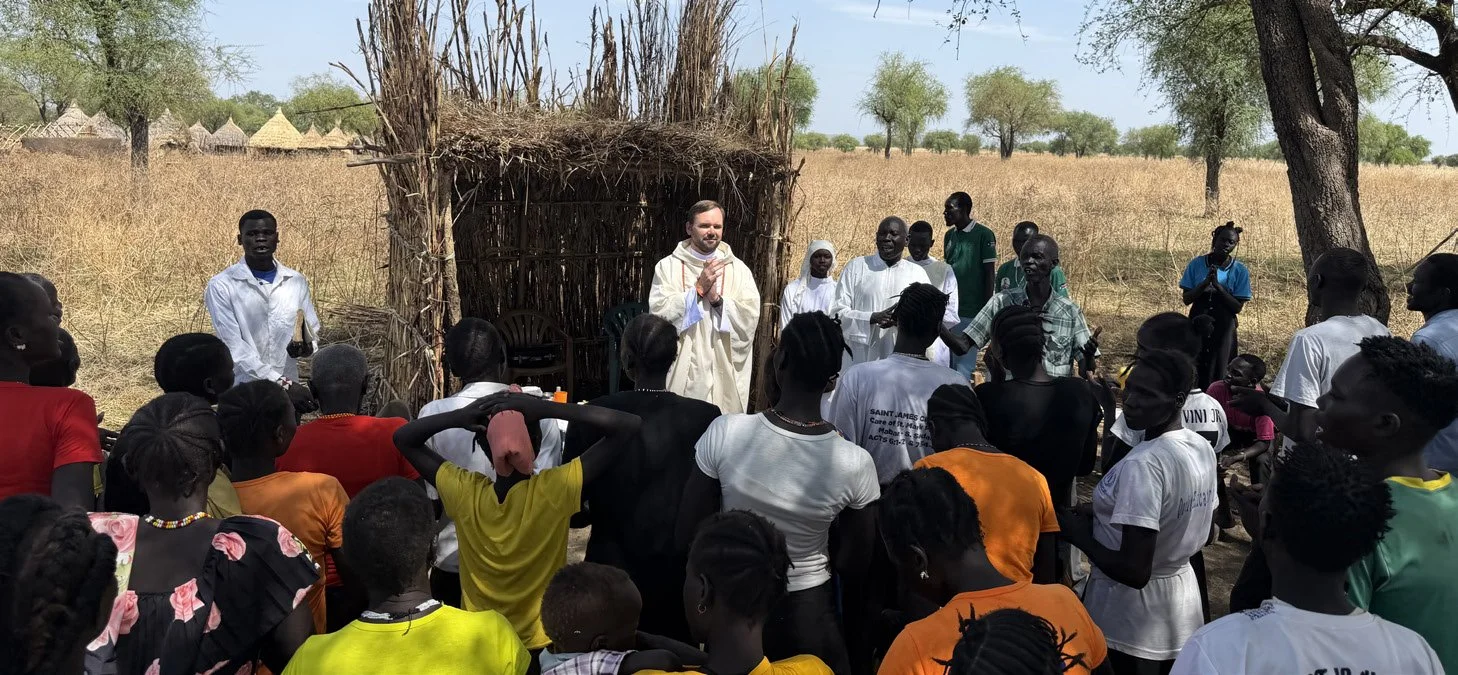
Fr. Matt Ippel, SJ (this page, foreground), crosses the Yabus River with parish and youth leaders in Maban, South Sudan. He is on his way to celebrate Mass and visit the community in Thonbama village as part of his mission with Jesuit Refugee Service. (Below, top to bottom) Fr. Ippel with Youssiry and Mohammed, students in a computer skills course he taught; Fr. Ippel celebrating Easter Mass in 2026; and Fr. Ippel with parish youth.
The first time Fr. Matt Ippel, SJ, ventured knee-deep across the murky waters of the Yabus River in South Sudan, the phrase “getting your feet wet” took on a whole new meaning for him.
Eventually, in his work for Jesuit Refugee Service (JRS), Fr. Ippel embarked on the trek every other Sunday to say Mass in the remote villages of Maban, his home from 2018 to 2021 and again in 2026.
When he entered the Society of Jesus, in 2013, he felt a particular call to walk with the poor and marginalized, and during his early years of formation he worked with immigrant and migrant communities. His subsequent mission to work with JRS only broadened his Jesuit vocation and deepened his own understanding of what he was meant to do. Founded in 1980 by Father General Pedro Arrupe, SJ, JRS began with a simple but profound question: How can the Society of Jesus do more to support people forced from their homes?
PHRASES LIKE ‘WAVES OF REFUGEES FLOODING ACROSS THE BORDER’ OR ‘SWARMS OF REFUGEES’ ARE NOT ONLY DEHUMANIZING, THEY ALSO FAIL TO CAPTURE THE REALITY.
Inspired by the plight of Vietnamese refugees, Fr. Arrupe called on Jesuits around the world to respond, giving rise to an international mission that today serves 57 countries. In South Sudan, JRS supports refugees and host communities through education, psychological support, livelihoods assistance, reconciliation and advocacy.
JRS has worked in Maban since 2013, following the arrival of thousands of refugees fleeing conflict in Sudan. With four refugee camps today, housing more than 220,000 people, JRS runs teacher training, rehabilitation and physiotherapy programs, and youth activities. It also provides support groups for survivors of gender-based violence and caregivers of people with disabilities. Alongside these programs, the pastoral department supports the local Catholic parish through ministry and faith formation.
To Fr. Ippel, the work of accompaniment is most visible in the relationships he has built. During regency, to build community, he worked with his friend Isaac, a refugee himself, to develop bi-weekly youth programming that included martial arts, volleyball and soccer. At the outset of the COVID shutdown, when Fr. Ippel’s JRS team was asked to leave Maban for precautionary reasons, he and his Jesuit companion Francis asked their respective provincials and the JRS International director if they could remain in Maban to ensure a continuity of presence in uncertain times.
Today, Fr. Ippel helps individuals in a refugee-led organization of people with disabilities strengthen their leadership capabilities, reflecting his belief that communities should not simply receive services but have greater ownership in shaping them. Years of working with JRS showed Fr. Ippel how easily people can disappear behind numbers and headlines.
“Phrases like ‘waves of refugees flooding across the border’ or ‘swarms of refugees’ are not only dehumanizing, they also fail to capture the reality,” he says.
According to the 2025 Global Trends report of the Office of the United Nations High Commissioner for Refugees (UNHCR), 68% of refugees reside in low- or middle-income countries and 65% live in a country neighboring their own. Behind those statistics are real people trying to rebuild lives that were interrupted, often under circumstances they didn’t choose. Even when a refugee reaches a place of safety, the challenges don’t end. Discrimination, exclusionary policies and the uncertainty of trying to build a future with limited resources are just some of the challenges refugees face.
“But what we hold in common is equally profound—a desire to live life fully, to learn and study, to see one’s children grow up, to earn a just income to support oneself and one’s family, and to give back to one’s community,” Fr. Ippel says. “I interact a lot with mothers, and I often think about my own mother. If they were to sit together under a tree in Doro refugee camp, they would quickly find that they are not so different. They love their families, they want their kids to have opportunities that they didn’t have, they make sacrifices, they make sure everyone feels welcomed, and they set examples to follow.”
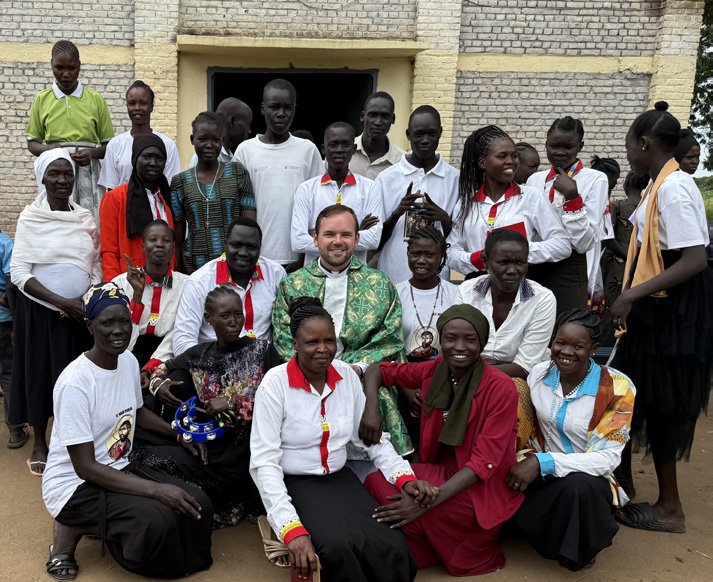
For Fr. Ippel, honoring common humanity creates room to recognize displaced persons for who they are and who they continue to become. The key is presence, he says.
“On the road to Emmaus, the disciples say to the stranger walking with them, ‘Stay with us, for it is nearly evening,’” Fr. Ippel says. “That is the request I hear most often here, not for a service to be provided or an item to be distributed, but for someone to remain. ‘I am here to be with you’ is the answer to it.”
Presence and accompaniment have become increasingly important as funding cuts have forced JRS to scale back its work in Maban, reducing its staff from 60 to 20 people. Father Ippel sees this as an opportunity to “imagine differently,” to inspire JRS workers to further strengthen and empower the people they serve.
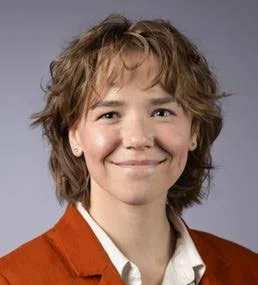
Maggie Palider, a 2022 graduate of Loyola University Chicago, is the Midwest Province’s assistant director of advancement and communications.
“It turns us towards the communities we walk with,” Fr. Ippel says. “And that matters.”